
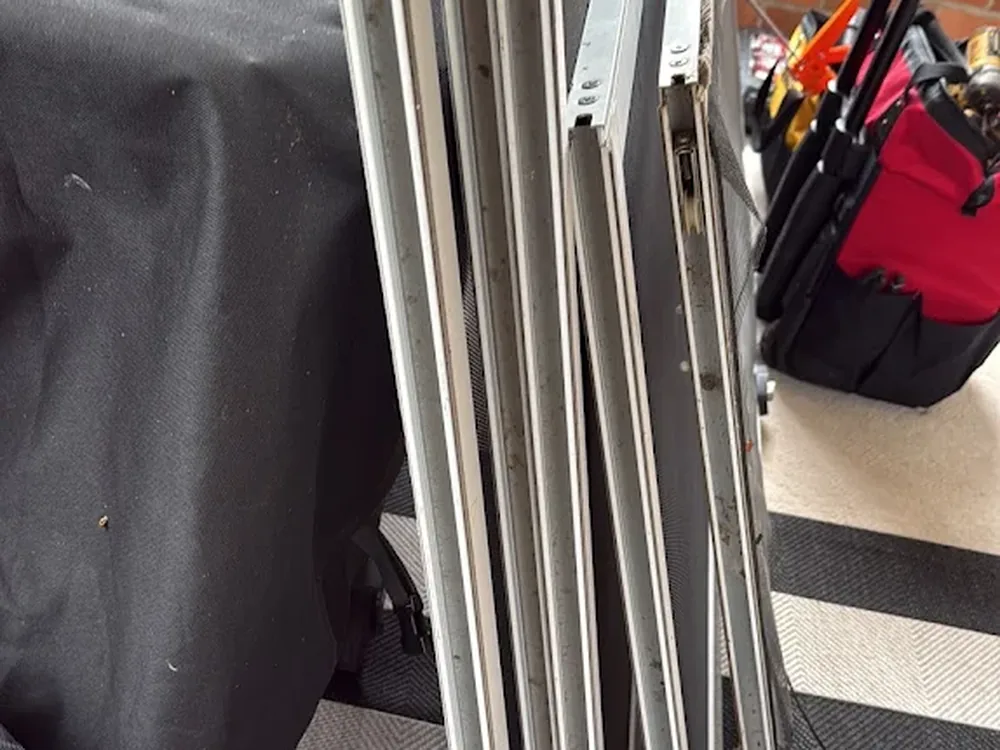
A residential patio door might cycle a few thousand times a year. A coffee shop entrance on a Robinson Township retail pad cycles that many times in a month. A 60-unit building in Monroeville has 60 balcony sliders, all installed the same week by the same crew, all reaching the end of their roller life within the same two-year window. That is commercial door work, not residential door work.
Commercial and multi-unit door hardware does not fail differently than residential hardware. It fails on a vastly compressed timeline, and the consequences of an unplanned failure are measured in lost revenue, liability exposure and after-hours call-out rates. That is the entire argument for commercial storefront sliding door maintenance on a schedule instead of waiting for the phone call.
What Actually Fails on a Commercial Entrance
Aluminum storefront systems are simple assemblies with a small number of wear points. Knowing which five things fail lets you inspect an entrance in about three minutes.
The five wear points
- The closer — hydraulic valves drift out of adjustment, then the body begins to leak fluid and loses all control of the door.
- The pivots — top pivot bushings and bottom pivots or floor-closer spindles carry the full leaf weight and wear into play, which lets the door sag and drag.
- The threshold and sweep — saddle thresholds loosen and the door sweep shreds, which turns into an air-infiltration and water-intrusion complaint.
- The lock and panic hardware — cylinders seize, latch bolts wear, and exit devices fall out of alignment with the strike.
- The glass — impact damage, stress cracks from frame movement, and seal failure on insulated storefront units.
Notice that four of the five are hardware and only one is glass. Most storefront emergencies we respond to are hardware failures that had been announcing themselves for weeks, and that pattern holds across Pittsburgh commercial properties of every size.
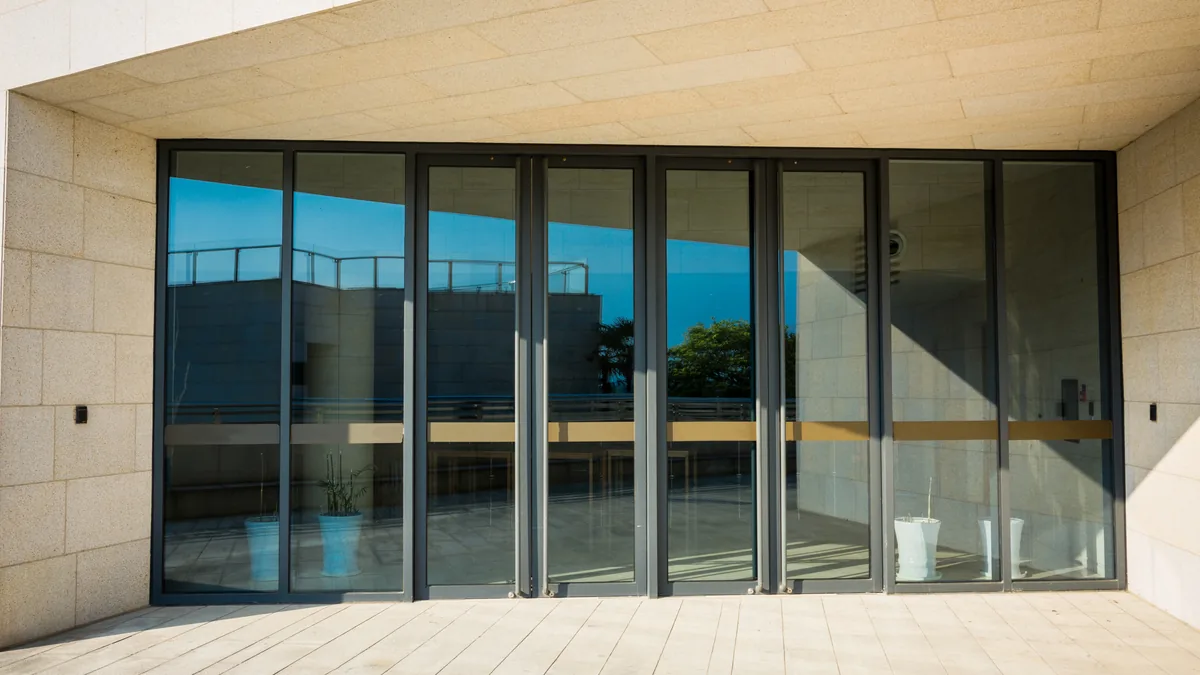
Door Closers: The Single Highest-Value Adjustment
A commercial closer is a hydraulic cylinder with independent valves for sweep speed, latch speed and backcheck, specified against ANSI/BHMA A156.4 and adjusted so the ADA Accessibility Standards limit of 5 lbf on an interior opening is actually met. Each one controls a different part of the arc, and a door that behaves badly is usually a door with one valve out of range rather than a door that needs new hardware.
What each symptom tells you
- Slams at the end of travel — the latch-speed valve is open too far.
- Closes too slowly to latch — the sweep-speed valve is closed too far, or the closer is undersized for the leaf.
- Flies open and hits the wall in wind — the backcheck valve needs to be brought in.
- Stops short of fully closing — usually building stack pressure fighting the closer, sometimes a dragging bottom pivot.
- Oily residue on the frame or the glass below the closer — the seal has failed, and this one is not adjustable. The body needs replacement.
Closers also respond to the season. The same hydraulic fluid that behaves correctly at 70 degrees thickens in January, which is why a door that latched perfectly in October suddenly fails to latch in a Pittsburgh cold snap. That is the main reason we recommend a pre-winter and post-winter visit rather than a single annual one.
Pivots, Sag and the Chain Reaction
Center-hung and offset-pivot aluminum doors have no hinges. The entire leaf hangs on a top pivot and sits on a bottom pivot or a floor closer spindle. As those bushings wear, play develops, the leaf drops at the lock edge, and then everything downstream goes wrong at once.
How a worn pivot escalates
- Play develops in the bushing and the leaf begins to sag at the lock stile.
- The bottom rail starts to scuff the threshold, which accelerates sweep wear.
- The latch no longer meets the strike squarely, so staff begin pulling the door to make it catch.
- That pulling load transfers into the closer arm and the top pivot, wearing both faster.
- Eventually the door either stops latching entirely or the glass stile takes a racking load and cracks.
A pivot set is an inexpensive part. The failure chain it triggers is not. This is the repair where preventive timing produces the largest savings, and it is also the one that most often gets misdiagnosed as a lock problem.
Field signs of pivot wear
- A visible gap that is wider at the top of the lock stile than at the bottom.
- Scuff marks or a polished arc on the threshold where the bottom rail is touching.
- A metallic clunk when the door reverses direction.
- A leaf that can be lifted or rocked by hand when unlatched.
- Daylight at the top corner of the lock stile when the door is closed.
Multi-Unit Balcony Sliders: Why Batching Wins
A mid-rise or garden-apartment property is the clearest case for scheduled maintenance that exists. Every slider in the building was installed in the same window, by the same crew, with the same rollers, and exposed to the same weather. They do not fail randomly — they fail as a cohort.
What batching changes
- One mobilization and one access coordination instead of dozens of individual trips.
- One roller, lock and weatherstrip specification across the whole building, which simplifies every future repair.
- Rollers upgraded to heavy-duty tandem ball-bearing units before panels start grinding the tracks flat.
- Tracks capped in stainless while the damage is still cosmetic, rather than replaced after it is structural.
- Lock and keeper alignment corrected building-wide, which closes out a recurring tenant security complaint.
- A documented record per unit, which is what you need at turnover and in a liability dispute.
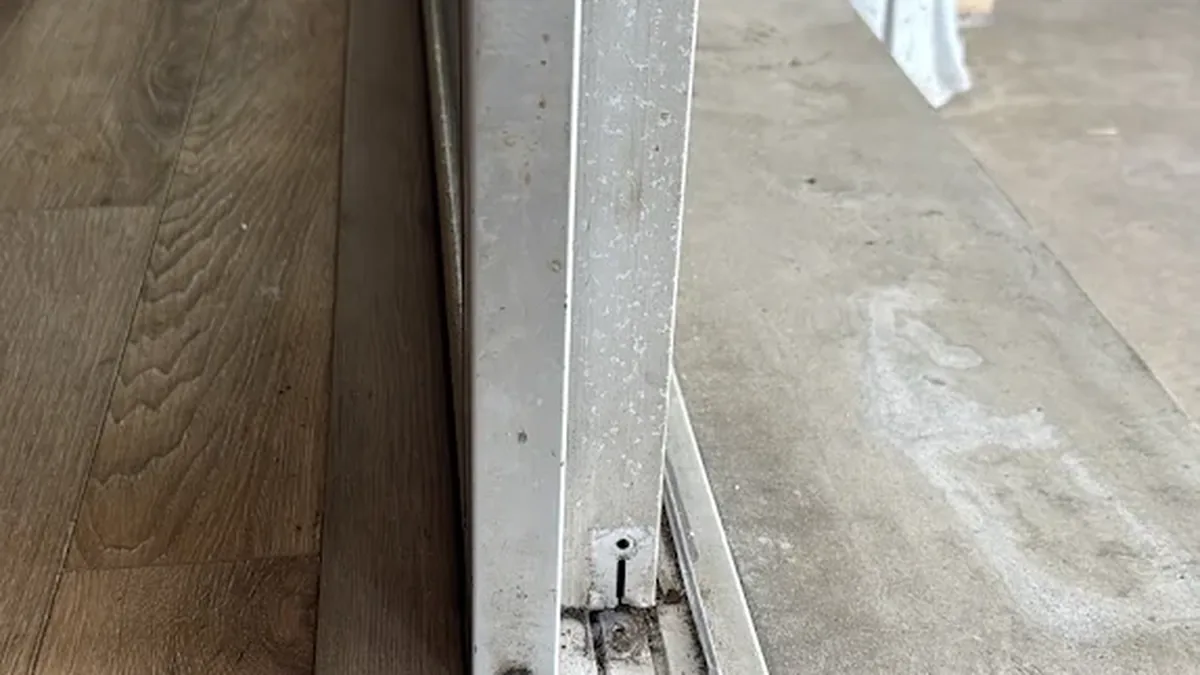
Tenant-facing failures also have a cost that does not appear on an invoice. A balcony door that cannot be locked is a security issue that generates calls, and a door that takes two hands to open is an accessibility problem for older residents. Both of those are roller and alignment work.
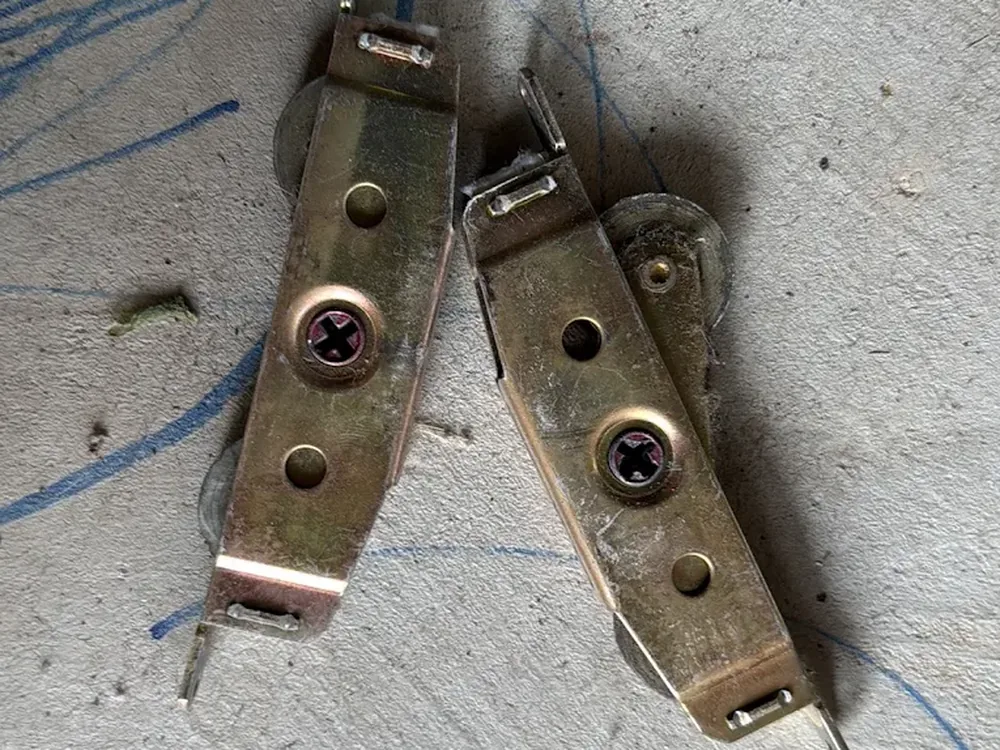
Emergency Glass and Board-Up: The Part You Plan Before You Need It
Broken storefront glass is the one failure you cannot defer. An open tenant space overnight is a security loss, an insurance problem and often a code issue. What separates a controlled incident from an expensive one is almost entirely preparation.
What happens on an after-hours call
- We secure the opening — board, brace and weather-seal — so the space is closed for the night.
- We photograph and document the damage and the glass specification for the insurance claim.
- We measure the opening and determine whether tempered, laminated or insulated glass is required.
- The glass is fabricated to the opening, typically a few business days for standard storefront sizes.
- We return, remove the temporary closure and set the permanent glass with the correct glazing method.
Prepare these in advance
- A single after-hours contact with authority to approve emergency securement.
- Glass specifications on file per opening, so fabrication starts without a return measurement trip.
- Your insurance carrier's documentation requirements, confirmed before an incident rather than during one.
- Confirmation of who is responsible under the lease — landlord or tenant — for glass and for hardware.
- Clear after-hours access instructions, including any alarm or keyholder procedure.
Tempered and laminated requirements are not negotiable on commercial entrances, and we will not reglaze an opening with annealed glass to save money or time. Storefront entries, sidelites and anything in a door leaf are safety-glazing locations.
A Maintenance Schedule You Can Actually Run
Here is the commercial storefront sliding door maintenance cadence we use with property managers and commercial tenants across Robinson Township, Moon Township, Monroeville and the city. It is deliberately simple enough to hand to a site manager.
The schedule
- Late autumn, before salt season: adjust all closers for cold weather, inspect and lubricate pivots, check thresholds and sweeps, verify every lock and exit device engages cleanly.
- Spring, after salt season: wash salt residue from tracks and hinge hardware, re-adjust closers for warm weather, inspect glass for new stress cracks, replace any shredded sweeps.
- Quarterly on high-traffic entrances: a short closer and pivot check only — fifteen minutes per door.
- At every unit turnover in multi-unit buildings: full slider service while the unit is vacant.
- Immediately, outside the schedule: any door that slams, sags, fails to latch, or shows oil residue from a leaking closer.
What a scheduled program replaces
- After-hours emergency rates on failures that were predictable weeks earlier.
- Revenue lost when a retail entrance cannot be used during business hours.
- Repeat tenant complaints about sliders that stick or will not lock.
- Liability exposure from slamming doors and excessive opening force on accessible routes.
- Full door and frame replacement that becomes necessary only because small parts were left to escalate.
Our position on commercial work is identical to our position on residential work. Diagnose the specific failed component, fit a current load-rated part, and keep the frame and the glass that are still doing their jobs. Repair first. Replace last.
What Does Commercial Storefront Sliding Door Maintenance Actually Cover?
Five wear points on every entrance: the closer, the pivots or floor spindle, the threshold and sweep, the lock and keeper, and the glazing itself. A visit checks and adjusts all five, documents each opening, and flags the parts that will not survive another season.
Setting Up Service
We work with single-tenant retail, restaurants, offices, medical suites, HOAs and property-management portfolios throughout the Pittsburgh metro and the surrounding counties. Service can run on a purchase-order or account basis, and we schedule around your operating hours rather than ours.
What to have ready
- The number of entrances and the number of units involved.
- Door type per opening — aluminum storefront, hollow metal, or balcony slider.
- The symptom per opening, and how long it has been happening.
- Your preferred service window, including whether after-hours or early-morning access is required.
- Any accessibility, panic-hardware or fire-rating requirements on the openings.
Questions We Get on This Exact Problem
Answered by the technicians who run these calls every week across the Pittsburgh metro.
How often should a commercial storefront door be serviced?
For a retail or food-service entrance in the Pittsburgh metro, twice a year is the right cadence: once in late autumn before salt season and once in spring after it. High-traffic entrances cycling several hundred times a day benefit from quarterly closer and pivot checks. Low-traffic office entries can usually run on an annual inspection.
Can a failing door closer be adjusted instead of replaced?
Often, yes. Closers have separate sweep speed, latch speed and backcheck valves, and a door that slams or fails to latch is frequently just out of adjustment or affected by building pressure. Once a closer is leaking hydraulic fluid, though, adjustment is no longer a fix — the seal has failed and the body has to be replaced.
What is involved in replacing a storefront door pivot?
Center-hung and offset-pivot aluminum doors carry their entire weight on a top pivot and a bottom pivot or floor closer spindle. Replacement means supporting the leaf, removing it from the frame, fitting the new pivot set, and then re-plumbing the door so it closes square against the jamb and the threshold seals. Done correctly it is a same-visit repair.
Do you board up commercial glass after hours?
Yes. Emergency board-up and glass securement run around the clock, which matters for a tenant space that cannot be left open overnight. We secure the opening first, document the damage for the insurance claim, and return with the correct tempered or laminated glass once it is fabricated.
Can you service every balcony slider in a multi-unit building in one visit?
That is how we prefer to do it. Batching units means one mobilization, one set of parts for the whole building, and consistent roller and lock specifications across every door. We coordinate tenant notice and access windows with the property manager and work floor by floor.