
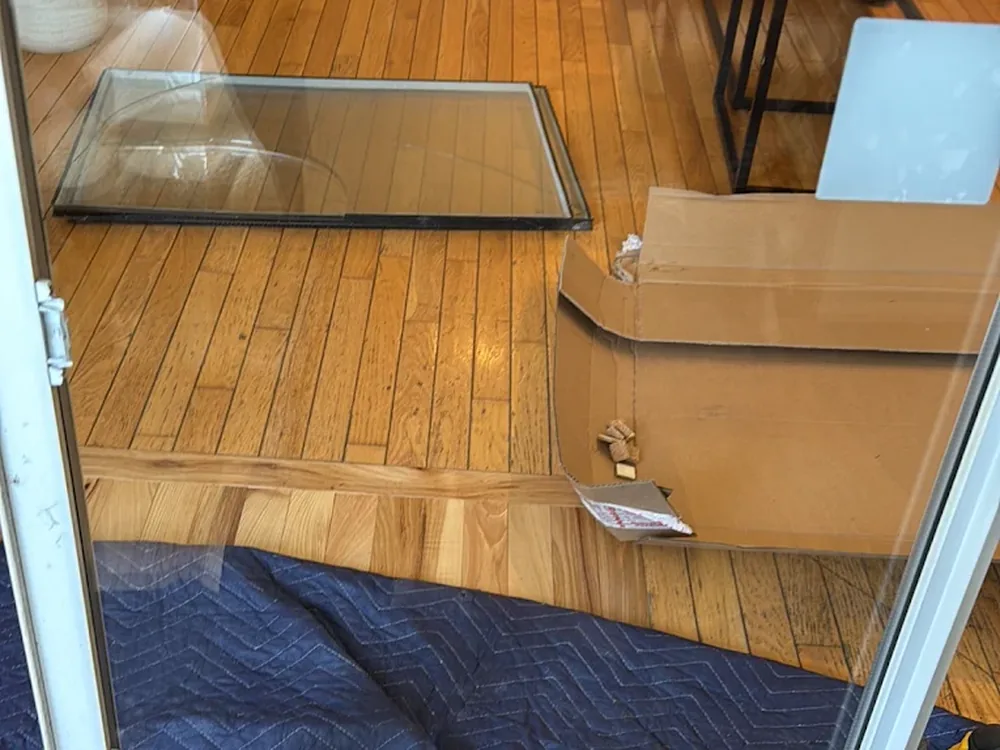
It starts as a faint cloudiness in one corner. By the next summer there is a milky band across the bottom third of the pane, and after a cold snap you can see actual water droplets trapped where no cloth will ever reach them. You are looking at insulated glass seal failure, and foggy double-pane windows are one of the most common calls we take across the North Hills and the South Hills alike.
The good news is the part that failed is not your window. It is a sealed glass cartridge that sits inside your window, and it can be swapped out on its own — that is all our glass replacement work on a fogged unit amounts to.
What a Double-Pane Unit Actually Is
An insulated glass unit — an IGU — is two or three panes of glass separated by a spacer bar, sealed around the entire perimeter, with the cavity between the panes filled with dry air or an inert gas such as argon. A desiccant inside the spacer absorbs any residual moisture at the factory. That sealed assembly is then glazed into the sash of a window or the panel of a patio door.
The parts that make it work
- Two or three lites of glass, often with a Low-E coating on one interior surface.
- A spacer bar, historically aluminum, now more often a warm-edge composite.
- Desiccant beads inside the spacer to absorb trace moisture.
- An inert gas fill — usually argon — that conducts heat far less readily than air.
- A primary and secondary perimeter sealant that holds all of it together.
Note what is not on that list: the frame, the sash, the hardware, the weatherstripping, the trim. None of those have anything to do with the fog you are seeing, and none of them are disturbed when we replace the sealed unit. A patio door panel that is also hard to slide has a separate patio door roller fault underneath it.
Why the Seal Fails
The perimeter seal spends its whole life flexing. Glass expands when the sun hits it and contracts when the temperature drops, and the sealant absorbs that movement thousands of times per year. Eventually a microscopic breach opens. Outside air carrying water vapor is drawn in, the desiccant saturates, and from that point the cavity breathes with every temperature swing. That is the mechanism behind every case of foggy double-pane windows we are called to.
The failure sequence
- Daily solar heating and nightly cooling flex the perimeter sealant.
- A microscopic breach forms, usually at a corner where stress concentrates.
- The argon fill escapes and ambient humid air replaces it.
- The desiccant saturates and can no longer absorb incoming moisture.
- Moisture condenses on the inner glass surfaces whenever the dew point is crossed.
- Mineral deposits etch the glass and the Low-E coating begins to haze permanently.
Why Pittsburgh Is Especially Hard on Seals
Our failure rate on foggy double-pane windows runs noticeably higher across Pittsburgh and its river valleys than in milder climates, and the reason is the sheer number of thermal cycles. Roughly 60 to 70 freeze-thaw cycles per year, long heating seasons, humid summers, and the river-valley temperature swings that let a south-facing pane hit 140 degrees in the afternoon and 20 degrees by dawn.
Patterns we see repeatedly
- South and west elevations fail first — often five to eight years before north-facing units in the same house.
- Large fixed patio door panels fail before the smaller operating sash next to them, because the glass area and the thermal load are both greater.
- Homes built from the mid-1990s through the mid-2000s in Wexford, Cranberry Township and Peters Township are hitting the back half of original IGU life right now.
- Units behind closed blinds or heavy drapes fail sooner, because trapped heat drives the cavity temperature even higher.
- Grilles-between-the-glass units show the haze earlier because the fog contrasts against the bars.
That last one is worth repeating: nothing about an aluminum-grille unit fails faster, you just notice it sooner.
Why We Do Not Recommend Defogging
Companies advertise a cheaper answer for foggy double-pane windows: drill two small holes in the glass, flush the cavity with a cleaning solution, and install a one-way breather valve. The haze does clear, and it looks like a bargain. Here is what you actually bought.
What defogging costs you
- The sealed cavity is now permanently vented, so the argon fill can never be restored.
- The insulating value drops substantially — closer to a single-pane assembly than to the unit you started with.
- Any etching already burned into the Low-E coating is still there after the flush.
- The cavity continues to breathe humid air, so the haze commonly returns within a season or two.
- Most window manufacturers treat a drilled unit as voiding any remaining glass warranty.
Our position is simple and it is the same position we take on rollers and balances: replace the component that failed, keep everything that still works. A new insulated unit in a sound sash restores both the view and the original energy performance for the next two decades.
How IGU Replacement Actually Works
This is the part homeowners are most surprised by. Replacing the glass in a patio door panel or a window sash is a contained, same-visit operation on a sound frame — there is no demolition, no exterior work, and no trim carpentry.
Our process on site
- We verify seal failure, then inspect the sash, glazing stops and frame for rot, racking or prior damage.
- We measure the daylight opening and the glass thickness, and record the coating, tint, tempering requirement and spacer type.
- We quote the exact unit — flat rate, including labor — before anything is ordered.
- The unit is fabricated to your measurements, typically five to ten business days for standard glass.
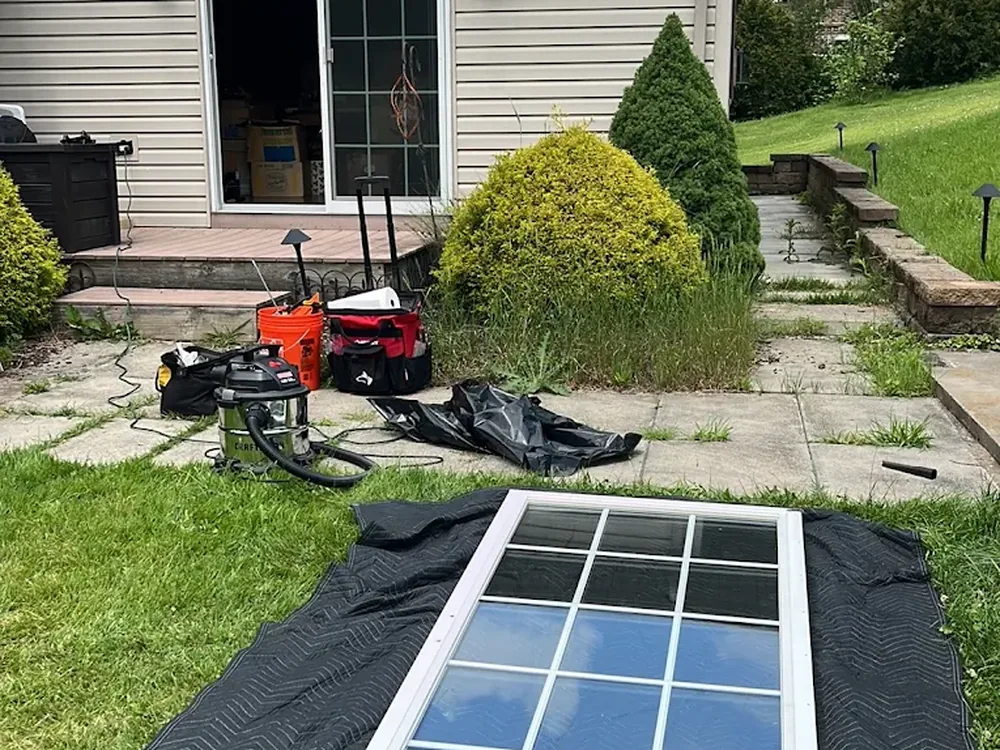
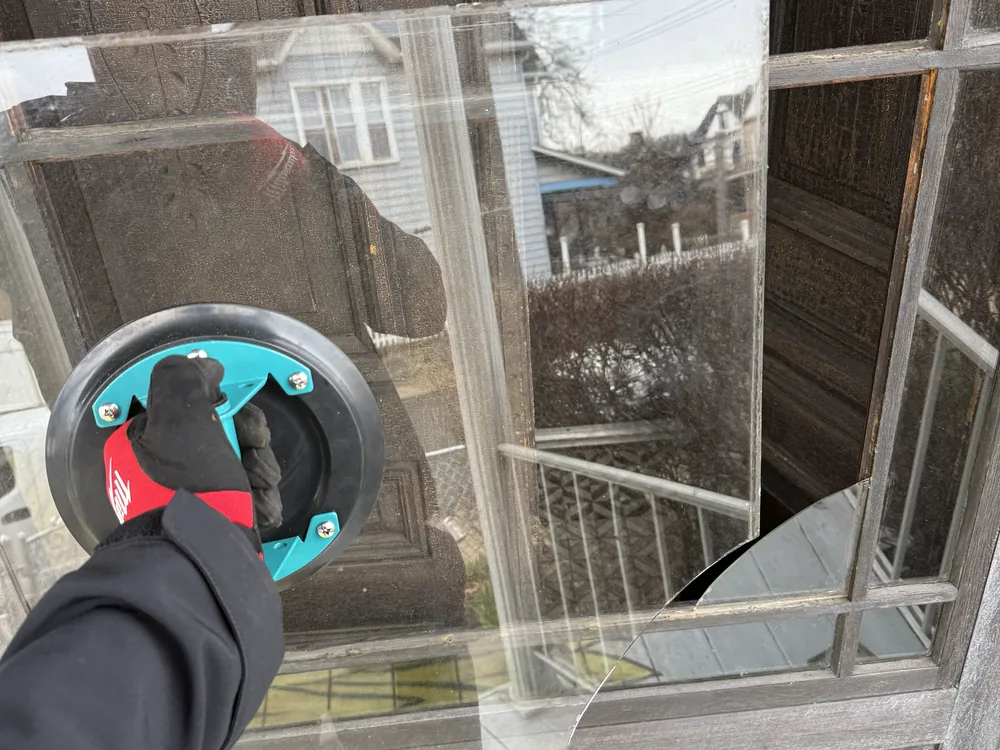
- On install day we remove the glazing stops, lift out the failed unit, clean and re-bed the glazing channel, set the new unit, and reinstall the stops.
- We re-test the operation of the sash or panel, because new glass can weigh slightly differently than the original.
Where the sash itself is rotted, delaminated or racked badly out of square, glass alone will not hold a seal. That is one of the few cases where we will tell you the opening genuinely needs replacement, and we tell you before you spend money on glass.
Should You Replace One Unit or All of Them?
Homeowners with several foggy double-pane windows almost always ask this, and the honest answer depends on elevation rather than on count.
How we advise it
- If two or more units on the same sun-exposed wall have failed, the rest of that wall is usually within a few years of following. Batching them saves on trips and measurement visits.
- If a single unit on a shaded elevation failed, treat it as a one-off — there is no reason to pre-emptively replace sound glass.
- If you are selling, replace the ones a buyer or inspector will see from the main living space first. Fogged glass reads as deferred maintenance.
- If a unit is fogged and also cracked, it moves up the list regardless of elevation, because cracked glass is a security and safety issue.
There is no efficiency argument for replacing glass that has an intact seal. A sound 20-year-old insulated unit is still doing its job.
Do Foggy Double-Pane Windows Have to Be Replaced?
No. The failed component is the sealed glass cartridge, not the window. On a sound sash and frame we remove the glazing stops, lift the dead unit out, and bed a new insulated unit in its place, which leaves your trim, drywall and siding completely untouched.
What It Costs and What You Get Back
Insulated glass replacement is priced per unit, and the variables are size, thickness, coating, tempering and how far the glass has to travel. A standard bedroom window sash unit sits at the low end. An oversized tempered patio door panel with Low-E and argon sits at the high end. In every case the number we quote on site is the number on the invoice.
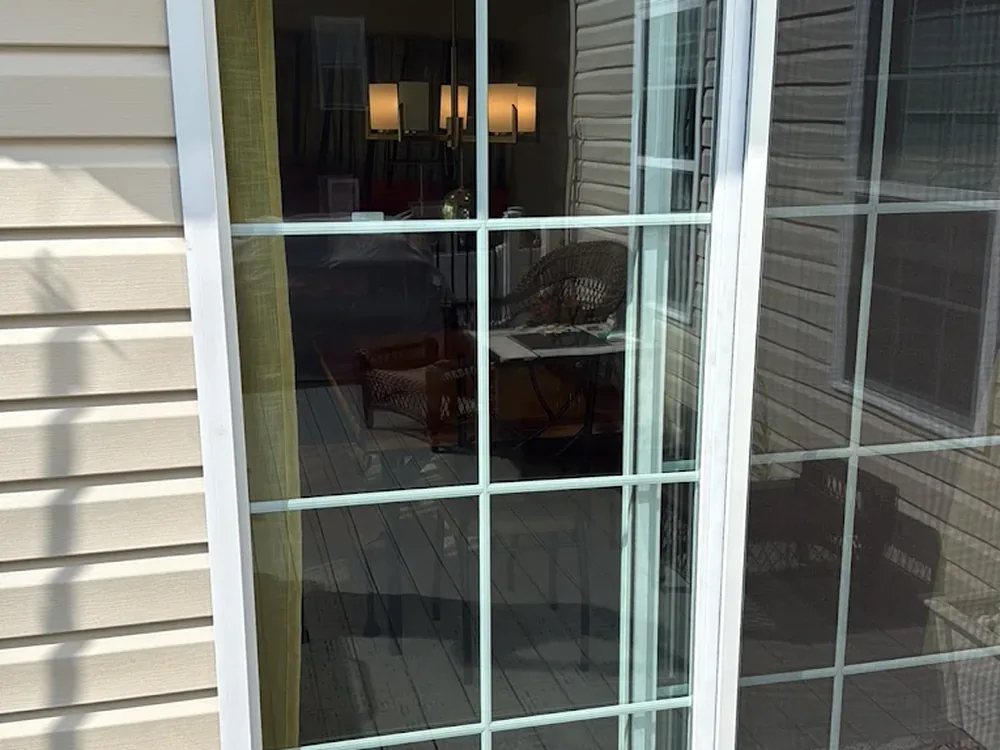
What you get back is the view, the comfort of a pane that is not radiating cold, and a restored insulating assembly — for a fraction of a full window replacement, with no disruption to your trim, drywall or siding. Across the Pittsburgh metro, a whole-window replacement quote is routinely three to five times what the glass replacement costs.
When to Call Us
Call as soon as you see persistent haze. Foggy double-pane windows are never an emergency, but there is a real benefit to catching one before mineral etching sets into the Low-E coating, because etching is the one part of the damage that cleaning cannot address. We cover Pittsburgh and every community in the surrounding counties, and measurement visits are free.
Bring these to the call
- Which elevation the window faces — south, west, north or east.
- Roughly how long the haze has been visible.
- Whether the pane is also cracked or chipped.
- Whether there is a manufacturer label or etched stamp in a corner of the glass.
- The approximate age of the window or patio door.
Questions We Get on This Exact Problem
Answered by the technicians who run these calls every week across the Pittsburgh metro.
Can a foggy double-pane window be defogged instead of replaced?
There are services that drill the glass, flush the cavity and install a breather vent. It clears the visible haze temporarily, but it also permanently vents the sealed cavity — the argon fill is gone, the insulating value drops toward a single-pane assembly, and the haze usually returns within a couple of seasons. We replace the insulated glass unit instead, which restores both the clarity and the original energy performance.
Do I have to replace the whole window if the glass is fogged?
Almost never. The insulated glass unit is a separate sealed sandwich of glass that sits inside the sash or panel. If the frame, sash and hardware are sound, we remove the glazing stops, take out the failed unit, and install a new one built to the measured opening. The frame, trim, siding and interior finish are never disturbed.
How long does it take to get replacement insulated glass in Pittsburgh?
Standard sizes with clear or Low-E glass typically arrive within five to ten business days of measurement. Oversized patio door panels, tempered units, obscure or tinted glass and anything requiring a custom spacer can run two to three weeks. We measure first, quote the exact unit, then order — we never guess at sizes.
Why did my windows fog up only eight years after installation?
Seal life depends far more on sun exposure and thermal cycling than on age alone. South and west elevations in Pittsburgh go through daily expansion and contraction on top of roughly 60 to 70 freeze-thaw cycles per year. Units on those walls commonly fail years before identical units on a shaded north wall.
Is a fogged window actually costing me money?
Yes, though less than the marketing suggests. Once the seal breaks, the argon or krypton fill escapes and moisture enters, so the unit loses a meaningful share of its insulating value and the Low-E coating begins to degrade where moisture sits. You lose comfort near the glass and some heating efficiency — and you lose the view entirely, which is usually what finally prompts the call.