
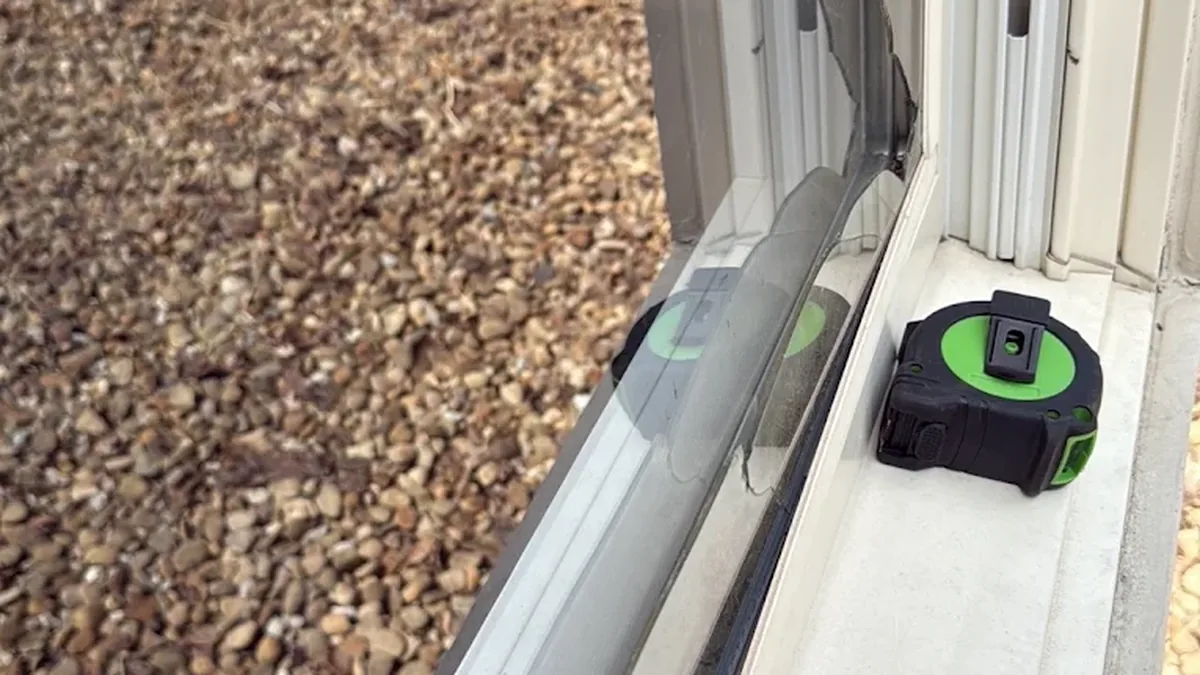
Two complaints, one underlying theme. The first: a window won't stay open — you push a double-hung sash up, let go, and it slides straight back down onto the sill. The second: you turn the crank on a casement and the handle spins happily while the window does not move an inch. In both cases the glass, the frame and the sash are usually in fine shape. What failed is the small piece of hardware that was doing the actual work.
Replacement window salespeople rarely mention that distinction, because the hardware repair costs a small fraction of a new window. They are just as quiet about foggy double-pane windows, which are also a component failure rather than a whole-window failure, and the same logic makes this a window repair rather than a window replacement.
First, Identify What Kind of Window You Have
The repair path depends entirely on the mechanism, and there are three common families in Pittsburgh housing stock. Which one you have decides why the window won't stay open and what the fix costs. You can tell them apart in about ten seconds.
The three mechanisms
- Double-hung with balances — the sash slides vertically, and the counterweight is a spring device hidden in the jamb channel. Typical of windows from roughly 1960 onward and all vinyl replacements.
- Double-hung with sash cords and weights — the sash slides vertically, and a cotton or nylon cord runs over a pulley at the top of the jamb to an iron weight inside the wall pocket. Typical of original wood windows in pre-war city homes.
- Casement with an operator — the sash swings outward on hinge arms, driven by a geared crank at the sill. Common in mid-century and in higher-end newer construction.
Double-Hung Balances: What Fails and Why
A balance stores energy to offset the weight of the sash; when it stops doing that, the window won't stay open. There are three types in common service, and each fails in a recognizable way.
Balance types and their failure signatures
- Coil balances — a flat spring in a cartridge. When the spring loses temper or the cord detaches, the sash drops in one motion with no resistance at all.
- Spiral balances — a twisted rod inside a tube. When the tip breaks loose from the bottom bracket the rod unwinds, and you often hear a distinct metallic rattle in the jamb.
- Block-and-tackle balances — a pulley and string assembly. The string frays over years of travel and eventually parts; the sash then drops partway and sticks.
- Tilt latches and shoe pivots — not balances themselves, but when these break the sash loses its connection to the balance and behaves exactly as if the balance failed.
The reason we replace balances in pairs is load sharing. Each balance is sized to roughly half the sash weight. Pair a fresh balance with a fatigued one and the new unit carries more than its share, the sash racks slightly in the opening, and the weatherstripping wears unevenly. The second balance costs very little when the sash is already out.
The sash-weight test
- Raise the sash to roughly the midpoint of its travel.
- Release it slowly, keeping your hands clear of the path.
- If it holds position, both balances are working.
- If it drifts down slowly, the balances are fatigued but not broken — plan the repair.
- If it drops immediately, at least one balance has failed outright.
Sash Cords and Weights in Older Pittsburgh Homes
In the city neighborhoods and in Sewickley, Mount Lebanon and the older sections of Bethel Park, a large share of original wood double-hungs still run on cords and cast-iron weights. It is a beautifully simple system and it lasts for decades, but cotton cord is a consumable. Standard #8 cotton sash cord measures 1/4 inch in diameter and #10 measures 5/16 inch, and we match the original so the pulley runs clean.
When a cord parts, the weight falls to the bottom of the pocket and the sash loses its counterbalance. Homeowners often respond by jamming the sash with a stick or painting it permanently shut. Both of those turn a 45-minute repair into a bigger job.
What a cord-and-weight rebuild involves
- Removing the interior stop molding and the parting bead without splitting the trim.
- Taking the sash out and opening the access pocket in the jamb.
- Retrieving the dropped weight and verifying it still matches the sash weight.
- Replacing the pulley if the sheave is seized or the bearing is worn.
- Running new braided cord, knotting it into the weight and seating it in the sash kerf.
- Reinstalling the sash, re-fitting the parting bead and stop, and testing travel from fully closed to fully open.
Why this repair is worth doing properly
- Original wood sash is often old-growth lumber that will outlast any replacement unit.
- The weights are still there in the wall — the system only needs cord, not parts.
- Restoring the counterbalance means the window becomes usable again for ventilation and egress.
- On historic streetscapes, keeping the original sash preserves the exterior sightlines that a vinyl insert destroys.
We do run into pockets where a previous owner stuffed fiberglass insulation into the weight cavity. That is a dead end for the cord system, and in those cases we discuss converting the window to a jamb-liner balance instead.
Casement Operators: When the Crank Spins Free
A casement operator is a small worm-gear gearbox. The crank turns the worm, the worm drives a gear, and the gear pushes an extension arm that swings the sash. When you hear and feel the handle turning with no load at all, the teeth on that gear have stripped.
What strips a casement gear
- A binding sash — by far the most common cause. If the hinge arms are stiff, corroded or out of alignment, every crank loads the gear far beyond its design.
- Years of winter salt and grit working into the hinge track at the sill.
- Paint or finish applied over the hinge arms, which turns smooth travel into friction.
- Forcing the crank against a sash that is frozen shut or blocked by a screen or storm panel.
- Simple age — zinc gear teeth wear, and 25 to 30 years is a normal service life.
This is why we never replace an operator in isolation. If we fit a new gearbox to a sash that still binds, the new gear will strip on the same schedule as the old one. The repair is the operator plus the cause.
Our casement repair sequence
- Disconnect the arm and swing the sash by hand to feel exactly where it binds.
- Clean, free and lubricate the hinge arms and the sill track, or replace hinges that are corroded past saving.
- Match the replacement operator by arm length, handedness and mounting hole pattern — not by brand name.
- Install the operator, reconnect the arm and set the sash so it closes square against the weatherstrip.
- Verify the lock points engage along the full height without the handle being forced.
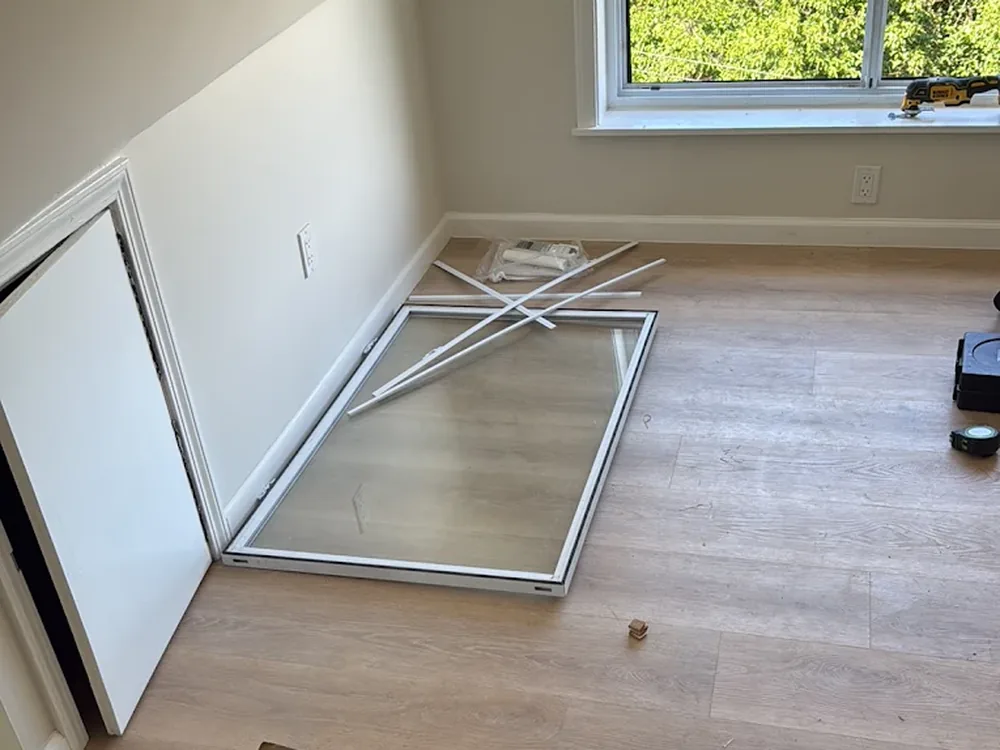
What Pittsburgh Weather Does to Window Hardware
Window hardware here lives a harder life than the catalogs assume. Roughly 60 to 70 freeze-thaw cycles a year flex every joint. Road and sidewalk salt gets tracked onto sills and into hinge tracks, where it corrodes zinc and steel. Long heating seasons mean a sash that is closed and loaded for months at a time, then suddenly operated.
Seasonal patterns on our schedule
- Late winter: frozen casement sashes forced open, stripping operators.
- Spring: homeowners open double-hungs for the first time in months and discover the balances failed sometime over the winter.
- Summer: sashes that will not stay up during the only weeks they are needed for ventilation.
- Autumn: casements that no longer close square, which shows up as a draft at the lock stile.
The practical takeaway: hardware failures almost always announce themselves one season before they become urgent. A sash that drifts down slowly in June is a sash that drops in September, and by October that window won't stay open at all.
What These Repairs Cost Compared to Replacement
Balance replacement is priced per window, with a meaningful discount when we do several in one visit — most of the time on site is access and sash removal, which is shared across openings. Cord-and-weight rebuilds are priced per window and depend on how the trim was installed. Operator replacement is priced per unit, with hinge work quoted separately if the arms need replacing.
Against that, a single replacement window installed in the Pittsburgh metro typically runs many multiples of the hardware repair, before any interior trim or exterior capping work. On a sound frame with sound glass, the math is not close. We will tell you when the frame genuinely is past saving — that is the whole point of diagnosing before quoting.
When a Window Won't Stay Open, Is the Glass Ever at Fault?
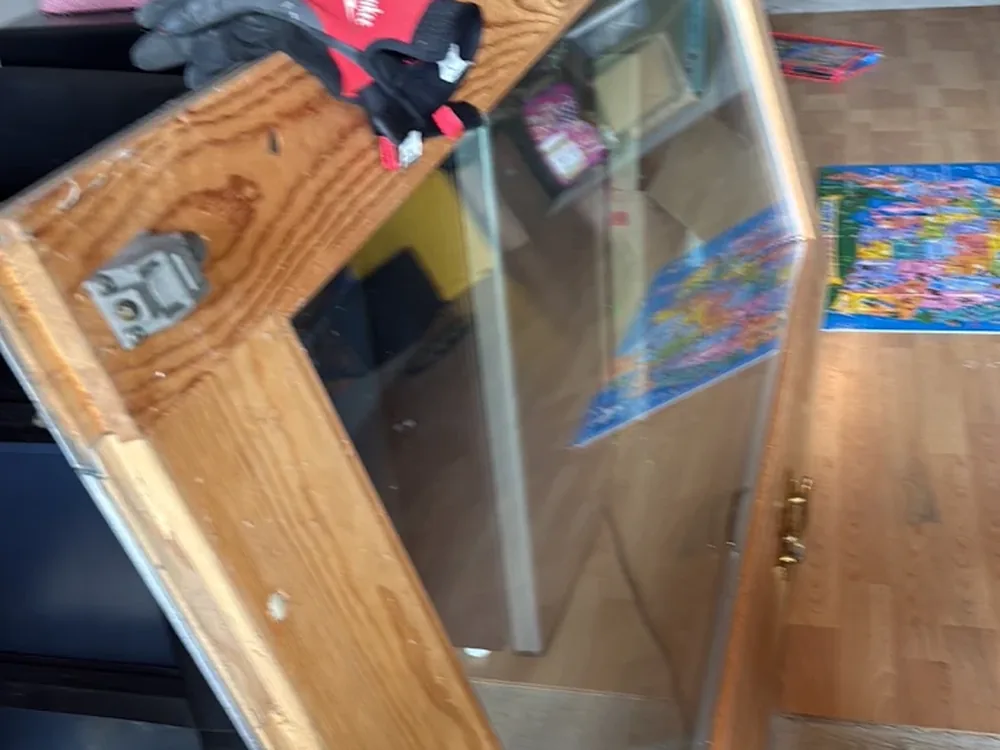
Almost never. The glass and the sash are passive weight; the counterbalance is what holds them. A fogged or cracked pane is a separate repair that we can handle on the same visit, but it has no bearing on whether the sash holds its position.
Booking the Repair
Most homes we visit have more than one affected window, and that is the efficient way to handle it — one trip, one access setup, several openings. We serve Pittsburgh and every community in the surrounding counties, with no travel surcharge by municipality.
What to tell us when you call
- How many windows are affected and which rooms they are in.
- Whether the sash slides vertically or swings outward on a crank.
- Whether the sash drops immediately, drifts slowly, or sticks partway.
- For casements: whether the crank spins freely or feels stiff and loaded.
- Whether any affected window is a bedroom egress window, so we can prioritize it.
Questions We Get on This Exact Problem
Answered by the technicians who run these calls every week across the Pittsburgh metro.
Why does my double-hung window fall shut when I let go?
The counterbalance system that holds the sash weight has failed. In windows built after roughly 1960 that means a broken coil, spiral or block-and-tackle balance; in older wood windows it means a snapped sash cord and a weight sitting at the bottom of the frame pocket. The sash itself is fine — nothing is holding its weight anymore.
Can a single broken window balance be replaced on its own?
It can, but we replace them in pairs. Balances are matched to sash weight and travel length, and a new balance on one side paired with a 20-year-old balance on the other side puts the sash out of plumb and overloads the new unit. Replacing both sides is a small incremental cost and roughly doubles the service life you get.
My casement crank spins but the window doesn't move. What broke?
The gear teeth inside the operator have stripped. The crank, the gearbox and the extension arm are a single mechanism; when the worm gear wears, the handle turns freely without transmitting motion to the arm. We replace the operator body and inspect the hinge arms and sash track, because a binding sash is usually what wore the gear out in the first place.
Are replacement balances still available for old or discontinued windows?
Yes, in almost every case. Balances are specified by type, travel length and sash weight rather than by brand, so a current equivalent can be matched even when the original manufacturer no longer exists. We carry and source coil, spiral and block-and-tackle balances for legacy systems including Acorn, Keller, Season-All, Thermal Industries and Nanik.
Is a window that won't stay open a safety issue?
It can be. A sash that drops unexpectedly is a genuine finger and hand hazard, especially with children in the house, and a window that cannot be held open is not usable as a secondary means of escape from a bedroom. We treat bedroom egress windows as a priority on the schedule.